Thursday, February 27, 2025

Gaslighting

Gaslighting is a form of psychological manipulation in which a person or group seeks to make someone question their own reality, memory, perceptions, or sanity. It involves tactics that lead the target to doubt their understanding of events or feelings, often making them feel confused, insecure, or dependent on the manipulator. The term originates from the 1938 play Gas Light (and its 1944 film adaptation) by Patrick Hamilton, where a husband manipulates his wife into believing she’s losing her mind by dimming the gas lights and denying it.


Here’s a detailed breakdown:


Key Characteristics of Gaslighting


  1. Denial of Reality: The manipulator denies events, conversations, or facts, even when evidence exists. For example, “That never happened” or “You’re imagining things.”

  2. Trivializing Feelings: They dismiss the target’s emotions, saying things like, “You’re overreacting” or “You’re too sensitive.”

  3. Blame-Shifting: The manipulator shifts responsibility, making the target feel at fault, e.g., “If you weren’t so paranoid, this wouldn’t be an issue.”

  4. Withholding Information: They pretend not to understand or refuse to engage, saying, “I don’t know what you’re talking about.”

  5. Confusion and Doubt: Over time, the target begins to second-guess their memory, judgment, or perception, often feeling they can’t trust themselves.

  6. Gradual Escalation: Gaslighting often starts subtly, becoming more intense as the manipulator gains control.

Examples


  • Personal Relationship: A partner insists, “I never said I’d call you last night—you’re making it up,” even though they did, leaving the other person unsure of their memory.

  • Workplace: A boss says, “You didn’t submit that report on time—I never saw it,” despite evidence to the contrary, making the employee question their competence.

  • Public or Media Context: A leader or outlet repeatedly claims, “The economy is booming—your struggles are just in your head,” ignoring clear data, aiming to undermine public perception.

Psychological Impact


Gaslighting can cause significant harm, including:


  • Anxiety, depression, or low self-esteem.

  • Confusion and self-doubt, leading to dependency on the manipulator.

  • Long-term trauma, as the target internalizes the belief that they’re unreliable or “crazy.”

Victims may struggle to recognize gaslighting, especially if it’s gradual or comes from someone they trust.


Intent and Context


  • Intent: Gaslighting is often deliberate, used to gain power, control, or avoid accountability. However, it can also occur unintentionally if someone’s denial or dismissal stems from ignorance or defensiveness.

  • Context: It’s common in abusive relationships (romantic, familial, or professional), but it can also appear in broader settings like politics or media, where narratives are shaped to manipulate public perception.

Relation to Logic and Argumentation


Gaslighting isn’t a formal logical fallacy like those we’ve discussed (e.g., straw man, ad hominem), but it intersects with fallacious reasoning:


  • It can involve denial of evidence (ignoring facts) or ad hominem (attacking the target’s sanity or credibility).

  • It creates a false dilemma by framing the target’s perception as either correct (which the manipulator denies) or delusional, ignoring nuance or truth.

  • It resembles a circular argument if the manipulator insists on their version repeatedly, assuming it’s true without proof.

However, gaslighting is more psychological than logical—it’s about manipulation, not just flawed reasoning.


Historical and Cultural Evolution


The term gained modern prominence in the #MeToo era and discussions of abuse, as psychologists and advocates highlighted its role in power dynamics. By 2025, it’s widely recognized in mental health, media, and politics, often misused to describe any disagreement but properly applied to intentional, manipulative denial.


How to Identify and Address It


  • Signs: Persistent confusion, self-doubt, or feeling “crazy” despite evidence; the manipulator’s refusal to acknowledge facts or emotions.

  • Countering: Document events (e.g., texts, emails) to verify reality; seek support from trusted people or professionals; set boundaries or exit toxic relationships.

  • Prevention: Educate on healthy communication—gaslighting thrives in isolation and confusion.

Final Notes


Gaslighting is insidious because it erodes trust in oneself, but recognizing it is the first step to reclaiming clarity. It’s not about logic but power, making it distinct from the argument types we’ve explored in previous posts, though it can overlap with fallacies in manipulative discourse.


Lack of Critical Thinking Combined with Hyper Political Emotion

What happens when you combine lack of critical thinking with hyper political emotion? You get a viral internet thread that spreads far and wide. The problem? In this particular case it appears to be false. 


Let's critically analyze the claim using logic and see what we find.


The Claim

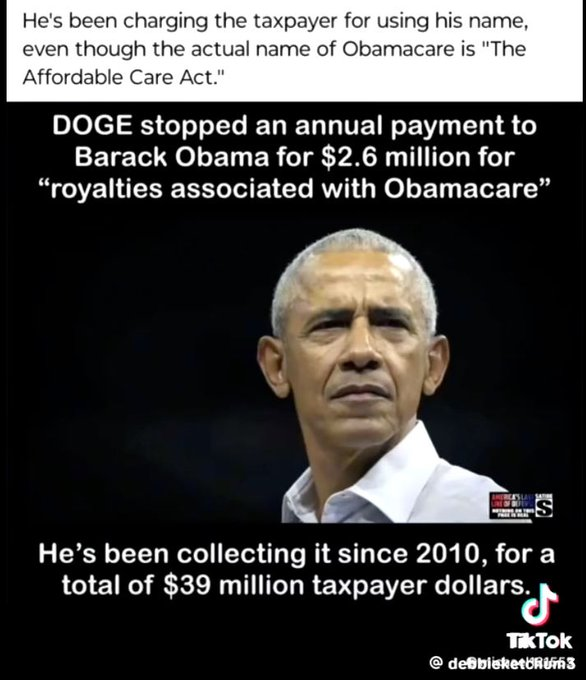
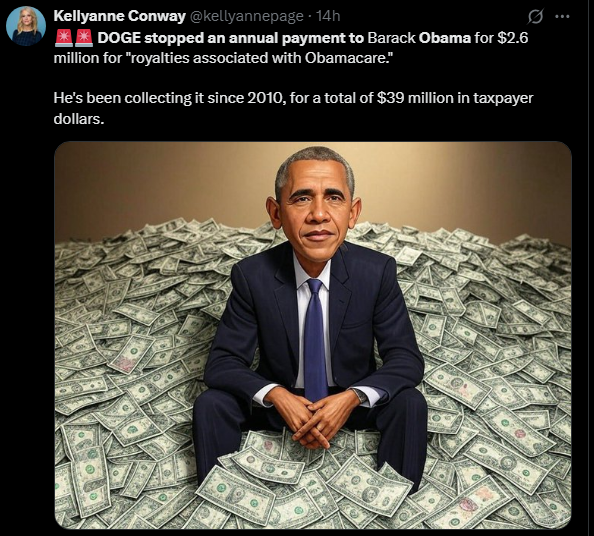
The images and posts, claim:

  • The Department of Government Efficiency (DOGE), led by Elon Musk, halted a $2.6 million annual payment to former President Barack Obama, described as “royalties” for the use of his name in “Obamacare” (the Affordable Care Act).


  • It alleges Obama has been collecting this payment since 2010, totaling $39 million in taxpayer dollars over 15 years.

  • The article frames this as a “shocking display of fiscal responsibility” by DOGE, uncovering a hidden clause in the Affordable Care Act that entitled Obama to royalties each time the program’s nickname was used.


The Evidence

Web sources (e.g., Snopes, Times Now, KnowInsiders, India Today, Tech ARP, Lead Stories) and posts on X consistently identify The Dunning-Kruger Times as the source of this claim.

The Dunning-Kruger Times “About Us” page explicitly states it produces “parody, satire, and tomfoolery,” not factual reporting.

The Dunning-Kruger Times is not a credible news source for factual information. Its content is intended as humor or satire, not truth. This alone renders the article invalid as a factual report, as it is explicitly fictional.

  • The claim that Obama received $2.6 million annually, totaling $39 million since 2010, is false. No public records, government budgets, or credible reports support this. The idea of royalties for using “Obamacare” contradicts U.S. trademark law (e.g., Obama didn’t trademark the term, and it’s a public domain nickname) and ACA legislation. The article’s assertion is a fabrication, consistent with the site’s satirical intent.

  • The Dunning-Kruger Times updated this narrative in 2025, attributing the action to DOGE.

  • The article’s revival of a debunked satirical claim, now reframed with DOGE, confirms its fictional nature. The timing—coinciding with DOGE’s high-profile actions in 2025—suggests an attempt to exploit current events for engagement, but it remains satire, not fact.


Conclusion

The article “DOGE Halts $2.6 Million Annual Payment to Obama for ‘Obamacare’ Royalties” on The Dunning-Kruger Times is not valid as a factual report. It is a satirical piece, as its source is explicitly a parody website known for humor and fiction, not factual journalism. The claims that Barack Obama received $2.6 million annually for Obamacare royalties, totaling $39 million since 2010, and that DOGE halted this payment, are false. No credible evidence—public records, government budgets, or legal documents—supports these assertions, and fact-checkers have debunked similar claims since 2017. The article’s intent is to entertain or provoke, not inform, making it invalid for factual purposes as of February 27, 2025.

This, in my opinion highlights the problems with lack of critical thinking. Or, perhaps it's lazy thinking as it is much easier to share something that fits your ideologicalframework than investigate the truth. However, I will also say that the volume of claims by all sides make it literally impossible to follow up and investigate them all. Perhaps there are those who know this and know the average person's propensity to share something that fits their ideological framework using these two things to their advantage.

What Can We Do?

When you see or read something, regardless of the source, you should have a healthy amount of skepticism. Healthy skepticism does mean automatically think it's true or false. Keep in mind that there are some out there who want to manipulate you by manipulating the narrative. Also remember, even trusted sources can get it wrong.

If what you see or read is important to you, before you share take a deep breath and do your research.


Wednesday, February 26, 2025

Senator Warren Claims "An Unelected Billionaire Posing as Co-President is trying to "delete" the CFPB..."

The statement posted on X by Elizabeth Warren—“An unelected billionaire posing as Co-President is trying to ‘delete’ the CFPB, the only financial regulator dedicated solely to protecting American's wallets,” refers to Elon Musk and makes a concerning claim. Let's analyze this statement and construct a logical argument to support or refute it.


Elon Musk is Posing as Co-President?

Posts on X and web reports indicate Musk, as the world’s richest person, has been tapped by President Trump to lead the Department of Government Efficiency (DOGE) since Trump’s inauguration on January 20, 2025. Court documents, including filings from the White House and federal lawsuits, describe Musk as a “non-career special government employee” and a senior adviser to President Donald Trump. Specifically, these documents state that Musk has no actual or formal authority to make government decisions himself. His role is limited to advising the president and communicating the president’s directives. This designation, established under a 1962 law for temporary executive branch hires, restricts Musk to working no more than 130 days per year and does not include a paycheck or full-time employment status with DOGE.


Elizabeth Warren and others, including posts on X, use “co-president” metaphorically to suggest Musk’s outsized influence, given his role in advising Trump, accessing government agencies, and driving policy like dismantling the CFPB. Web reports (e.g., CNN, The Washington Post) echo Musk’s unelected status and his involvement in Trump’s administration, but “co-president” is a rhetorical flourish, not a literal title. This claim is hyperbolic, as Musk lacks formal executive power and operates under Trump’s directive. The statement holds as a critique of perceived overreach but exaggerates his official role. Furthermore, this claim omits the fact the President is the only individual in the Executive branch who is elected which further weakens the argument. 


Elon Musk is trying to Delete the CFPB?

This statement claims Musk is actively working to eliminate the Consumer Financial Protection Bureau (CFPB). 

Evidence

Web reports and posts on X consistently show Musk’s public statements and actions targeting the CFPB. On February 7, 2025, he posted “CFPB RIP” with a tombstone emoji on X, signaling intent to dismantle it. Reports (e.g., The New York Times, CNN, Rolling Stone) detail DOGE’s moves—embedding staff in CFPB, shutting down its headquarters, ordering a work stoppage, and accessing internal systems—as part of efforts to “gut” or “delete” the agency. However, these statements cannot be considered conclusive.


Additional Claims

Warren’s remarks (e.g., at CFPB headquarters on February 10, 2025) and posts on X allege Musk’s motivation is tied to his business interests, like X Money, which would face CFPB oversight.


Analysis

Musk’s actions and statements support the claim he’s trying to dismantle the CFPB, but “delete” may overstate the outcome. Furthermore, these claims do not address the fact that Musk’s actions and statements lack formal executive power and that Musk has no actual or formal authority to make government decisions. Critics, including former CFPB officials and lawmakers, argue that dismantling the CFPB benefits Musk’s financial ventures by removing regulatory barriers, but this is based on inference, not definitive proof like internal documents or court testimony. Lastly, these claims do not acknowledge other agencies which would have regulatory oversight.


The CFPB is the "only financial regulator dedicated solely to protecting American's wallets"?

This claim asserts the CFPB is unique in its sole focus on consumer financial protection. 

Evidence

Web reports (e.g., Common Dreams, The Independent) describe the CFPB, created in 2010 under Dodd-Frank, as designed to protect consumers from financial fraud, predatory lending, and scams, returning over $20 billion to Americans. Warren and others (e.g., posts on X, Democracy Now!) emphasize its role as the “cop on the beat” for mortgages, credit cards, and loans, distinct from other regulators like the FDIC or SEC, which have broader mandates (bank stability, securities). However, critics (e.g., Republicans, Consumer Bankers Association) argue it overlaps with other agencies, calling it duplicative.

Analysis

The CFPB’s mission is consumer-focused, but the terms “only” and “solely” are overstated. Other agencies (e.g., FTC for consumer protection, OCC for banks) have regulatory overlap.

Logical Argument

Musk’s X posts (e.g., “CFPB RIP”), DOGE’s infiltration of CFPB (web reports from February 2025), and the agency’s work stoppage align with efforts to eliminate or severely weaken the CFPB. Also, Musk's business interests (X Money, Tesla auto loans) provide a motive, as CFPB oversight would regulate these ventures. Warren’s statements and posts on X reinforce this intent.

However, there are problems with these assertions. First, “Delete” implies total elimination, but legal constraints such as Congressional authority eliminate this possibility. Furthermore, Musk’s role is advisory, not decisive, limiting his ability to “delete” unilaterally.

The CFPB’s mission, as outlined in Dodd-Frank and described by Warren, targets consumer financial protection. Warren claims this is the "only" regulator "solely" focused on Consumer protection.
Again, there are problems with these assertions. Other agencies overlap with the CFPB regulatory function such as the FTC’s consumer fraud role and OCC’s bank oversight. A more comprehensive list follows below.

Identified Duplications with Other Agencies

Federal Reserve (FRB)
Federal Deposit Insurance Corporation (FDIC)
Office of the Comptroller of the Currency (OCC)
Federal Trade Commission (FTC)
National Credit Union Administration (NCUA)
State Regulators

Conclusion

The claim that Musk, an unelected billionaire with Trump administration influence, is trying to “delete” the CFPB aligns with evidence of his actions and intent, though “delete” overstates the current reality. “Posing as Co-President” is a hyperbolic critique of Musk’s power but resonates with some of the public perception on X and in web reports but doesn't reflect reality.

The CFPB’s unique consumer focus is mostly accurate but not absolute, given regulatory overlap. Furthermore, while the CFPB's focus is more specific, it does not support the expense of a separate agency given the regulatory overlap. Furthermore, if there are some items solely covered by the CFPB, these could be rolled into, and performed by, the other agencies listed.

The claims made by Senator Warren are persuasive but not entirely precise. Musk’s efforts target the CFPB, but legal and structural barriers prevent full deletion. The CFPB’s role, while central to consumer protection, isn’t the “only” regulator, and Musk’s influence, while significant, isn’t co-presidential. The rhetoric pushed by Senator Warren and others are clearly meant to foment fear in the general populace and manipulate public opinion, given its alarmist framing, strategic timing, and aim to mobilize Democrats against Musk and Trump. Terms like “unelected billionaire posing as Co-President” and “delete” exaggerate to heighten urgency.